Guitar Chord Progressions Made Simple: Master Music Theory on Virtual Guitar
Why Chord Progressions Matter for Virtual Guitar Players
Why do some chord progressions sound magical while others feel bland? You’re not alone if you’ve felt stuck randomly clicking through virtual guitar chords. Understanding basic music theory transforms this frustration into creative freedom—no expensive lessons or physical instrument required.

In this guide, you’ll discover how to:
- Decode theory secrets like the circle of fifths in minutes
- Create emotional tension and release in your playing
- Apply these concepts instantly using our interactive fretboard
Our free online guitar turns theory into a visual, engaging experience. Perfect for songwriters testing ideas or beginners mastering chords. Try our virtual guitar right now—it’s like having a music teacher in your browser!
Unlock the Circle of Fifths for Guitar
The circle of fifths sounds complex, but it’s really just a roadmap. It shows you which chords naturally work together. Think of it as musical GPS—it shows you which chords belong in each key.
How to See the Circle of Fifths on Your Virtual Fretboard
- Open our virtual guitar tool and select "Acoustic Guitar" (perfect for clear note tones)
- Find Middle C: Click the third fret on the fifth (A) string
- Move clockwise: Play G (third fret, sixth string), then D (second fret, third string)—these are adjacent on the circle
With the fretboard as your canvas, relationships between notes become obvious. Use our virtual guitar’s keyboard shortcuts (Z=M, X=A, C=B etc.) to jump between notes faster.
How to Find Key-Friendly Chords in 30 Seconds
Every major key has six "family chords" that always sound harmonious together. Let’s find them for G major:
- Start with your root chord: G major
- Circle of fifths neighbors: C major (left of G), D major (right of G)
- Relative minors: E minor, A minor, B minor
Pro tip: On our virtual guitar, strum these chords consecutively: G → C → D → Em. Hear how naturally they flow? That’s circle magic!
Chord Functions Decoded: Tonic, Dominant & Beyond
Chords have emotional "roles" in progressions:
- Tonic (home): G major - feels resolved and stable
- Dominant (traveler): D major - creates tension, wants to return home
- Subdominant (explorer): C major - gently moves away from home
How Major vs. Minor Chords Evoke Emotion
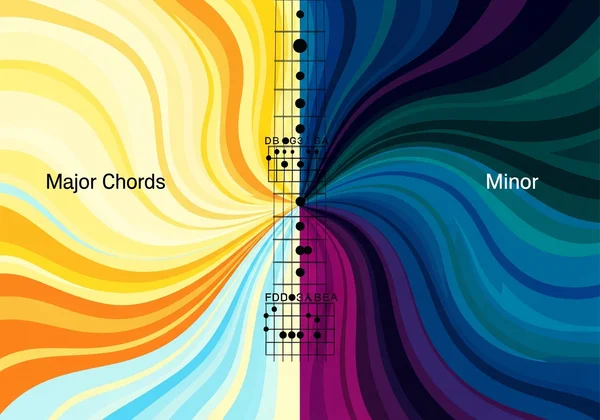
- Play C → F → G major chords → feels uplifting (perfect for pop choruses)
- Now try Am → F → C → G minor → suddenly moody (ideal for emotional verses)
Switch to our "Classical Guitar" tone to hear richer emotional textures. Test classical guitar tones here instantly—major/minor shifts become unmistakable.
Creating Tension & Release Like a Pro Composer
Songwriters use "cadences"—chord resolutions that feel like musical punctuation:
- Plagal ("Amen") Cadence: C → F → "feels complete but gentle"
- Perfect Authentic Cadence: G → D → G → "bold homecoming"
Try this now: On your virtual guitar, play G → D → Em → C (the "sensitive" pop progression). Notice how the Em creates suspense before resolving to C?
Audition Chord Combinations in Real-Time
Theory becomes powerful when you test ideas immediately. Our tool eliminates the gap between learning and doing—every chord plays instantly as you explore.
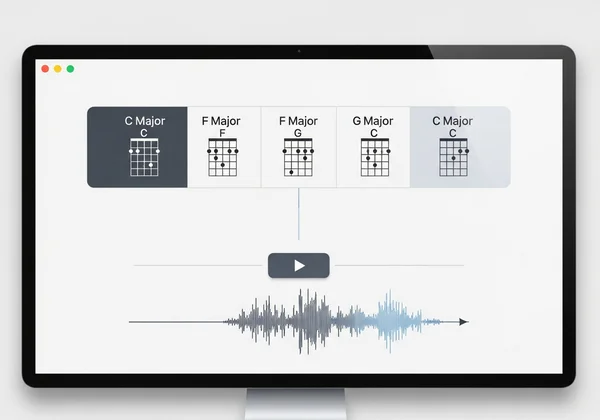
Build Your First Progression in VirtualGuitar.org
Follow this songwriter’s 3-min workflow:
- Select "Electric Guitar" for brighter attack (ideal for testing riffs)
- Choose home chord: Start with C major (press keys Z + E + V)
- Add emotion: Shift to F major (X + D + G) → sounds hopeful
- Create climax: Jump to G major (C + F + B) → intense anticipation
- Resolve home: Return to C major → satisfying conclusion
Composition shortcut: Loop these chords as your song backbone. Build your first chord progression—no theory degree needed!
Start Composing Confidently Today
With these shortcuts, you’re already thinking like a pro guitarist—without the years of trial and error. ✓ Circle of fifths = instant key/chord relationships ✓ Chord functions tell emotional stories ✓ Live testing accelerates learning 10x
The best part? Every concept works on our intuitive platform. Whether you’re:
- Writing a late-night song demo
- Practicing chord switches pain-free
- Impressing friends with "pro" progressions
...this tool turns theory into sound instantly.
Ready to try it yourself? Strum C → G → Am → F on your virtual guitar and hear the magic behind countless classics used in hits like Let It Be and With or Without You.
Virtual Guitar Chord Theory FAQs
Can I really learn music theory without playing a physical guitar?
Absolutely! Virtual guitars allow faster experimentation:
- Visual fretboard layout makes patterns obvious
- Instant feedback helps ear training
- Zero string pain = longer practice sessions
Start with our platform—it’s designed for effortless music discovery.
What are the easiest chord progressions for beginners?
Three fail-safe starters:
- C → G → Am → F: The "Four Chords Universal" progression
- G → D → Em → C: The "Folksy Feel-Good" sequence
- Am → F → C → G: The "Drama Builder" (heard in Hallelujah)
Test these progressions in our virtual guitar chord library—switch between acoustic/electric tones to discover your style.
How does our virtual guitar help me become a better songwriter?
It removes technical friction: Test ideas in seconds—no tuning needed. Save chord combos with bookmarks. Train your ear with precise notes. Next time inspiration strikes, you’ll have a musical sketchpad ready to go—your next hit starts with one click.